
Fleet Driver Coaching
- Home
- Fleet Driver Coaching
"On This Page"
Turn Driver Risk Into Consistent Coaching
Why Consistent Driver Coaching Matters
Coaching That Focuses on the Behaviors That Matter
How Fleet Driver Coaching Creates Accountability
End-to-End Fleet Driver Coaching and Accountability
Fleet Coaching and In-Cab Driver Coaching
Fleet Driver Coaching That Improves Safety and Accountability
Fleet driver coaching is most effective when it is timely, consistent and documented. Accenga helps fleets turn telematics and video data into a repeatable coaching process that identifies risky behavior, supports follow-up and measures whether driver performance improves.
Learn how Accenga’s broader fleet safety management approach connects driver coaching, telematics and measurable risk reduction.
Identify
Prioritize
Coach
Measure
Review telematics and video events to identify drivers who need coaching and follow-up.
Focus attention on the drivers and behaviors creating the greatest exposure.
Deliver timely, consistent coaching with documented acknowledgment and corrective action.
Track whether driver behavior improves and whether risk reduction is sustained over time.
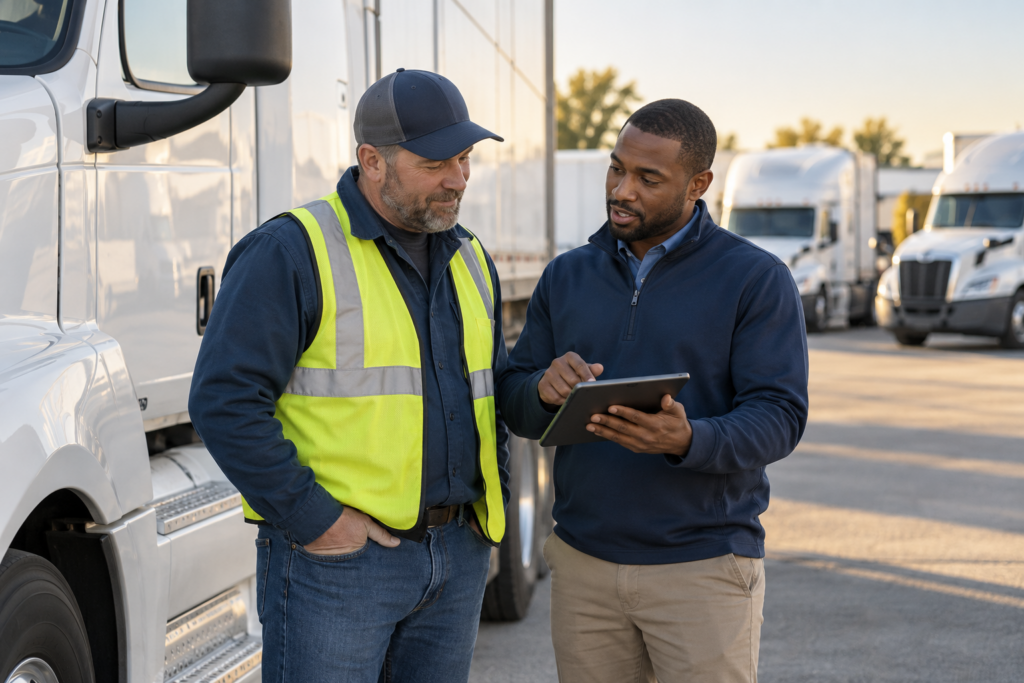
Why Consistent Fleet Driver Coaching Matters
Fleet driver coaching often breaks down because managers are busy, follow-up is inconsistent, and documentation is scattered. Accenga helps create a repeatable process so coaching happens when it should, the conversation is documented and fleets can see whether behavior actually changes afterward.
A consistent fleet coaching process gives managers a repeatable way to address risky behavior and measure whether drivers improve over time.
This gives fleet leaders better visibility into which drivers are improving, which behaviors continue to create risk and where additional follow-up may be needed.
Coaching That Focuses on the Behaviors That Matter
Accenga can support coaching around speeding, distracted driving, cell phone use, harsh events and other risk behaviors identified through telematics and video data. The goal is not to overwhelm drivers with every event. It is to focus attention on meaningful patterns, repeat behavior and the actions creating the greatest exposure.
For fleets managing speeding risk, learn more about Accenga’s fleet speeding management process.
This gives fleets a more consistent way to turn safety data into documented conversations, follow-up and measurable behavior change.
How Fleet Driver Coaching Creates Driver Accountability
Fleet driver coaching works best when the process is consistent from one driver to the next. Accenga helps fleets organize coaching so events are reviewed, drivers are identified, conversations are documented and follow-up is easier to track. This creates a clearer accountability process for both managers and drivers. For Hours of Service issues, Accenga can also help fleets create a consistent HOS compliance management process with documented follow-up and visibility.
Instead of relying on memory, spreadsheets or disconnected notes, fleets can use a repeatable process to show which behaviors were addressed, when coaching occurred and whether the driver acknowledged the conversation. This helps reduce gaps in follow-up and gives fleet leaders better visibility into whether coaching is actually happening.
A structured coaching process also makes it easier to distinguish between isolated events and repeat behavior. Drivers who improve after coaching can be recognized, while drivers who continue to create risk can receive additional attention. Over time, this gives fleets a clearer picture of which coaching efforts are working and where additional intervention may be needed.
The goal is not simply to document more activity. It is to create a reliable process that turns telematics and video data into meaningful conversations, measurable improvement and stronger driver accountability.
Learn more about our fleet safety management approach.
Want to measure whether coaching is actually changing driver behavior? See how to know if fleet driver coaching is working.
Fleet Driver Coaching Software That Measures Whether Coaching Is Working
Accenga’s fleet driver coaching software helps commercial fleets move beyond simply documenting coaching sessions. By combining telematics data, driver behavior trends and documented follow-up, fleets can measure whether coaching is actually reducing speeding, harsh events and other risky behaviors over time.
Unlike systems that only generate alerts or assign training, Accenga helps fleets create measurable accountability by identifying repeat behavior, tracking improvement and providing management with documentation that corrective action is actually working.
Comparing driver coaching platforms? See how Accenga approaches driver accountability differently in our Predictive Coach alternatives comparison.
End-to-End Fleet Driver Coaching and Accountability
Effective fleet driver coaching goes beyond sending an alert. Accenga helps fleets create an end-to-end process that identifies risky driving behavior from existing telematics and video data, prioritizes the drivers who need attention, supports targeted coaching, documents follow-up and measures whether behavior improves over time.
For speeding-related risk, that same accountability process can be used to identify repeat speeding behavior, coach drivers consistently and track whether improvement is sustained.
Fleet Coaching and In-Cab Driver Coaching
Fleet coaching works best when risky driving behavior is identified quickly and followed by consistent, documented action. Accenga helps fleets use telematics and video data to support in-cab driver coaching, targeted follow-up and measurable accountability without replacing the fleet technology already in place.
Whether the issue is speeding, distraction, harsh driving or another recurring behavior, Accenga helps managers focus coaching on the drivers who need attention and track whether performance improves over time.
What Makes Driver Coaching Effective
Effective driver coaching is not just about telling a driver what happened. It is about helping the driver understand the behavior, why it matters and what needs to change. Timely coaching makes the conversation more relevant, while consistent follow-up helps reinforce expectations across the fleet.
Documentation also matters. When coaching conversations are recorded, fleets have a clearer history of what was addressed, which drivers responded and where repeat behavior continues. This creates better visibility for managers and supports a more consistent approach to driver accountability.
Over time, a structured coaching process helps fleets move beyond reacting to individual events and toward managing patterns of behavior. That makes it easier to focus resources where they can have the greatest impact on safety and risk reduction across the entire fleet today.
How do you know driver coaching is working? Track whether risky behaviors decline after coaching, whether repeat events decrease and whether individual drivers show measurable improvement over time.
Turn Driver Coaching Into a Consistent Process
Accenga helps fleets move from scattered coaching conversations to a documented process that supports accountability, follow-up and measurable improvement.
What is fleet driver coaching?
Fleet driver coaching is a structured process for identifying risky driving behavior, communicating with the driver, documenting the coaching conversation and measuring whether behavior improves over time. Accenga helps fleets turn telematics and video data into a repeatable coaching and accountability process.
How does in-cab coaching fit into a fleet driver coaching program?
In-cab coaching can provide immediate driver feedback, while a broader fleet driver coaching program adds documented follow-up, manager review and accountability. Accenga helps fleets organize those events into a consistent process so coaching is tracked and improvement can be measured.